Equity and Inclusion in the Energy Transition: Household Adaptation to Sweden’s New Effect-based Tariff
This project investigates the social impacts of Sweden’s upcoming effect-based electricity tariff, which will be introduced nationwide by 2027 to reduce peak demand and support renewable energy integration. While the tariff is designed to encourage households to shift electricity use away from peak hours, its social consequences remain uncertain, especially for groups with limited adaptive capacity.
About the Project
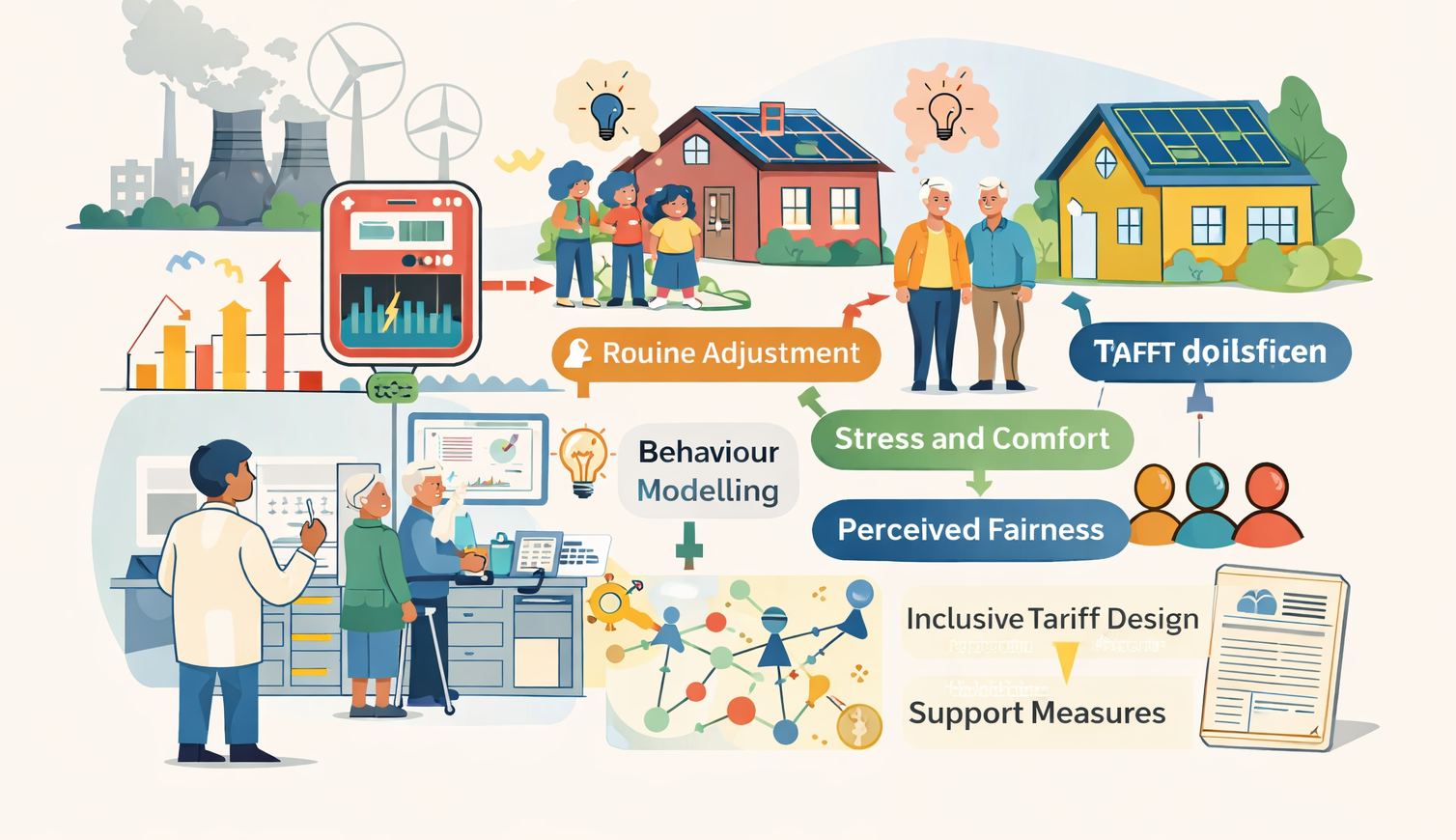
This project focuses on how different households perceive and respond to the new tariff, with particular attention to low-income families and elderly residents. Using a multidisciplinary approach that combines controlled laboratory experiments, behavioural modelling, and agent-based social simulation, the project aims to reveal differences in routines, constraints, stress, comfort, and perceived fairness across household groups.
The project will generate practical knowledge for more inclusive tariff design, targeted behavioural guidance, and support measures that help ensure Sweden’s energy transition is not only efficient, but also fair and socially sustainable.
Leave a Reply