People
Lab Director
Weizhuo Lu
Background: Professor with a focus on sustainable built environment and director of the Intelligent Human-Buildings Interactions lab (IHBI). Through this lab research, my goal is to gain a better understanding of the complex interaction between occupants and buildings and to develop effective strategies that enhance energy efficiency and adaptability to climate change.
Why the lab started: The relationship between occupants and buildings is a complex and diverse interaction that is influenced by a variety of factors such as climate conditions, building characteristics, and the occupants themselves. Oversimplification or homogenization of this interaction can result in the failure of building energy-saving technologies and reduce the adaptive capacity of occupants to climate change. Therefore, the main focus of my research is to develop occupant-centric energy efficiency and climate adaptation solutions. To achieve this goal, an Intelligent Human-Buildings Interaction Lab (IHBI) has been established. The lab is designed to allow occupants to test alternative building energy retrofitting measures on a clustered built environment. By integrating human-in-the-loop, the open-accessible IHBI Lab provides an original research platform to model how buildings affect occupants and how occupants interact with their built environment while adapting to climate change. The IHBI Lab is a valuable resource for sharing knowledge and facilitating communication, providing an effective platform to engage the public in sustainable transformation. Continue reading
Researchers
Chanachok Chokwitthaya
Staff scientist
My research makes a significant impact in the built environment sector, particularly enhancing occupant comfort and well-being. Through early incorporation of occupant behaviors and preferences into the design,…
My research makes a significant impact in the built environment sector, particularly enhancing occupant comfort and well-being. Through early incorporation of occupant behaviors and preferences into the design, renovation, and retrofitting of buildings, my efforts aim at bolstering energy efficiency, cutting down emissions, and uplifting living standards. This forward-thinking strategy, highlighted in my scholarly publications, pushes the envelope in sustainable building practices by ensuring spaces are occupant-centric from the get-go, thus circumventing expensive post-construction alterations.
I have involved in significant projects at both international and national levels, notably spearheading the Västerbotten pilot of the H2020-AURORAL project to cultivate smart, sustainable communities and enhance energy efficiency. Additionally, my role in the Envisioning Urban Transitions project collaborates with universities across Latvia, Sweden, and The Netherlands to foster innovative, sustainable urban development through creative and virtual methodologies. My involvement extends to initiatives funded by FORMAS, the Swedish Energy Agency, and Kempestiftelserna, further contributing to my expertise in building resilient and empowered communities.
As an assistant supervisor, I have mentored a PhD student (Pengju Liu) on occupant-centric demand response research, guiding his journey towards completion. My expertise in occupant behavior and simulation has been crucial in directing his research, integrating immersive virtual environments with thermal modeling. I have shared my PhD insights to avoid common pitfalls and encouraged his participation in conferences to expand his academic network. This mentorship underscores my commitment to fostering academic growth and contributing to sustainable building practices.
Kailun Feng
Assistant professor
My research focuses on the intersections of climate change, the built environment, and occupant behavior. I am particularly interested in understanding how climate change affects buildings and their…
My research focuses on the intersections of climate change, the built environment, and occupant behavior. I am particularly interested in understanding how climate change affects buildings and their occupants in “original cold but becoming warmer” regions like the Nordic regions, to support more resilient, adaptive, and human-centered building transitions. I am an Assistant Professor (tenure-track) at the Intelligent Human-Buildings Interaction Lab, Umeå University, and a Researcher in the International Energy Agency IEA EBC Annex 95: Buildings under Changing Climate. I also serve as Secretary Chair of the International Conference on Construction and Real Estate Management (ICCREM).
Thomas Olofsson
Professor, other position
Thomas Olofsson is the Deputy Vice-Chancellor (Vice Rector) for reserach at Umeå University, Sweden. He holds a professorship in Energy Efficiency, with a particular focus on buildings. In…
Thomas Olofsson is the Deputy Vice-Chancellor (Vice Rector) for reserach at Umeå University, Sweden. He holds a professorship in Energy Efficiency, with a particular focus on buildings. In 2019, he was appointed Guest Professor at Xi’an University of Architecture and Technology in China.
His research centers on reducing building energy end-use with improved indoor comfort. The scope is to propose, implement and evaluate strategies for increased energy performance and thermal comfort, evaluations of building energy efficiency, and parameter identification.
His methodological approaches include analytical models, simple regression models, more complex data-driven approaches, and physical simulations. Investigations also have a user and stakeholder perspective to map behavior, perception, adaptation, and attitudes.
His research spans multiple areas, including HVAC systems and indoor climate, building components, building construction systems, and district heating.
PhD & MSc Students
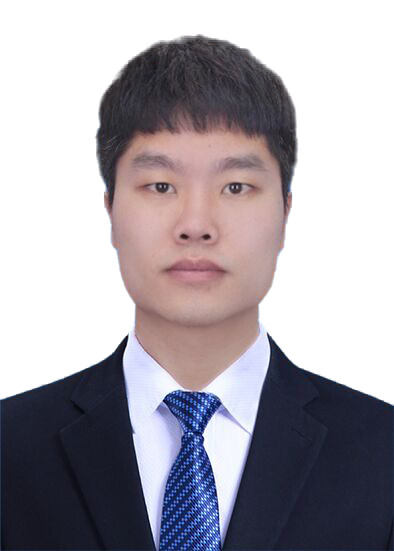
Jie Zhang
Exchange Doctoral Student
Jie Zhang is a PhD candidate in Civil Engineering at Harbin Institute of Technology, China, and is currently a Visiting PhD Student at Umeå University, Sweden. His research…
Jie Zhang is a PhD candidate in Civil Engineering at Harbin Institute of Technology, China, and is currently a Visiting PhD Student at Umeå University, Sweden. His research focuses on human–environment interaction and human–robot collaboration, with particular interests in understanding how environmental conditions influence human cognition, physiology, behavior, and collaborative performance.
His research integrates controlled laboratory experiments, virtual reality, field studies, and multimodal physiological sensing to investigate the effects of environmental factors on human responses and human–robot interaction. His work combines physiological computing, artificial intelligence, and data-driven modeling to quantify cognitive and affective states such as cognitive load, trust, and safety perception, with the goal of developing adaptive and human-centered intelligent systems.
During his visiting period at Umeå University, he conducts interdisciplinary research at the intersection of intelligent environments, human-centered sensing, and AI-assisted knowledge management. His long-term research aims to advance the understanding of human responses to complex environments and to support the design of safer, healthier, and more effective human–robot collaborative systems.

Pengju Liu
Doctoral student
I have a background in energy efficiency in buildings, and my current research focuses on demand response and demand-side flexibility in buildings, with a strong emphasis on an…
I have a background in energy efficiency in buildings, and my current research focuses on demand response and demand-side flexibility in buildings, with a strong emphasis on an occupant-centric perspective.
To address these challenges, I employ state-of-the-art methods, including energy modeling, machine learning, computational intelligence, and energy system optimization. My work is supported by advanced experimental and digital capabilities at Umeå University, particularly through the Intelligent Human-Buildings Interactions Lab.
My primary goal is to support the heterogeneous needs of stakeholders in the journey of the energy transition—developing practical and intelligent flexibility solutions that balance energy performance, system-level benefits, and occupant comfort and preferences.
Want to join our team?
We’re always interested in connecting with researchers and students.